
Campaigns already underwayUpdated
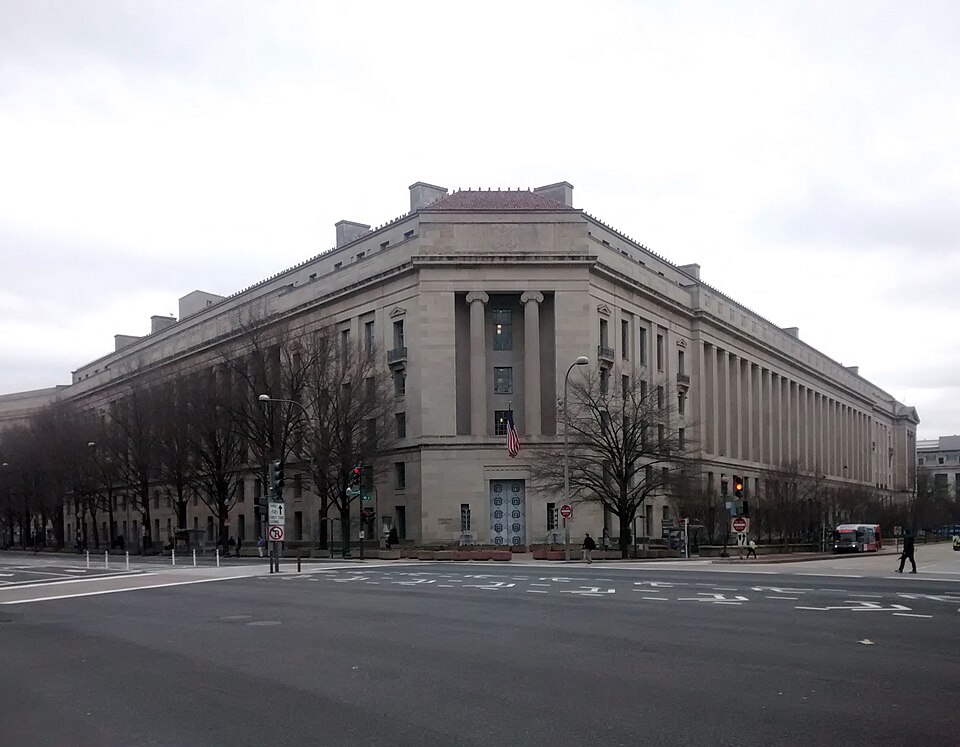
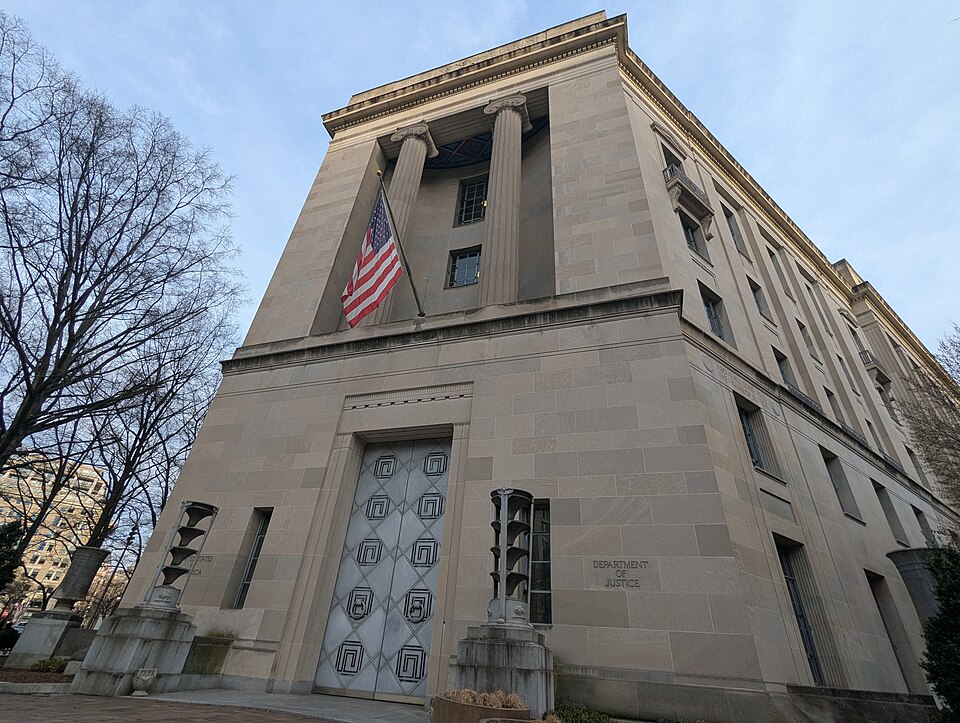
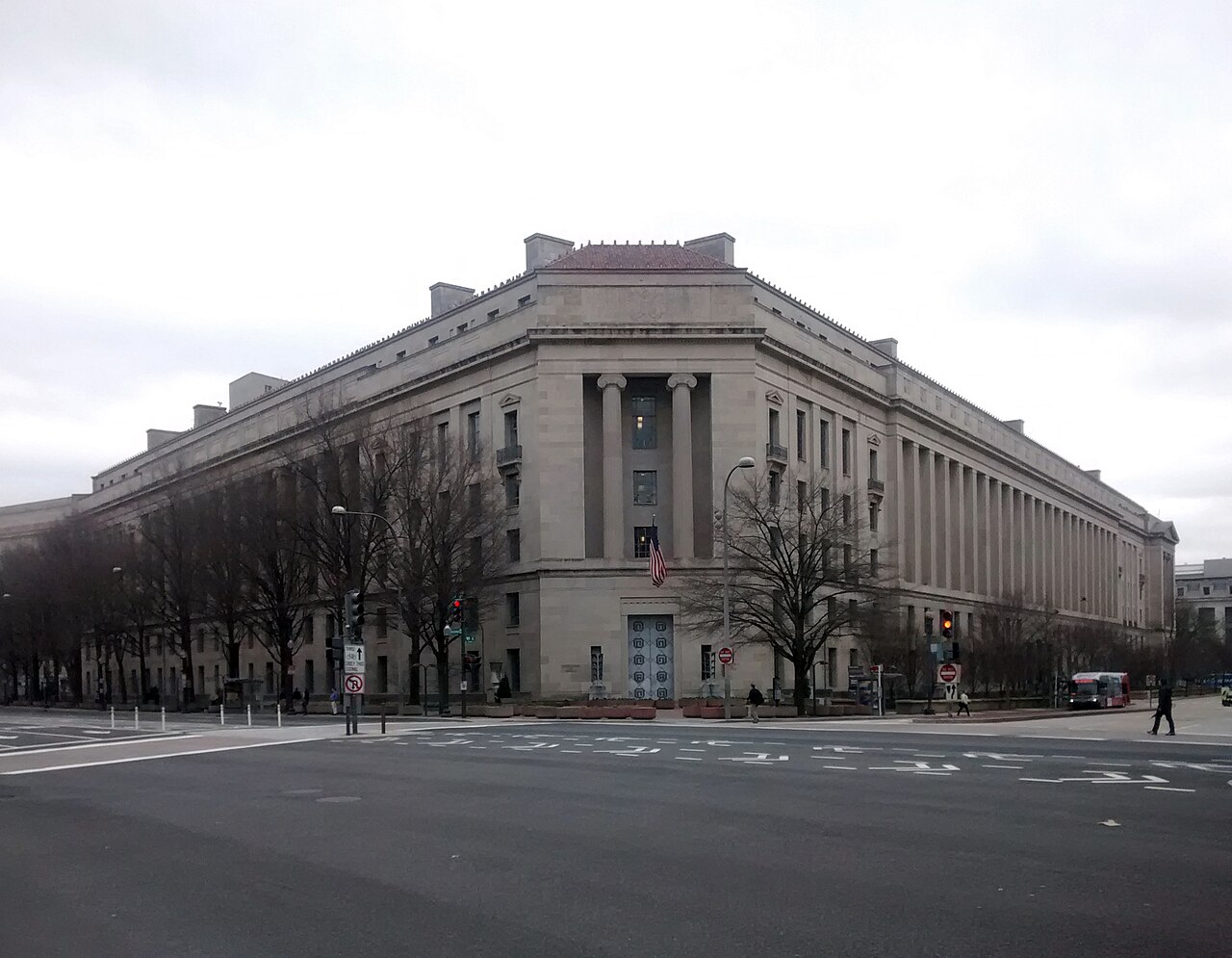
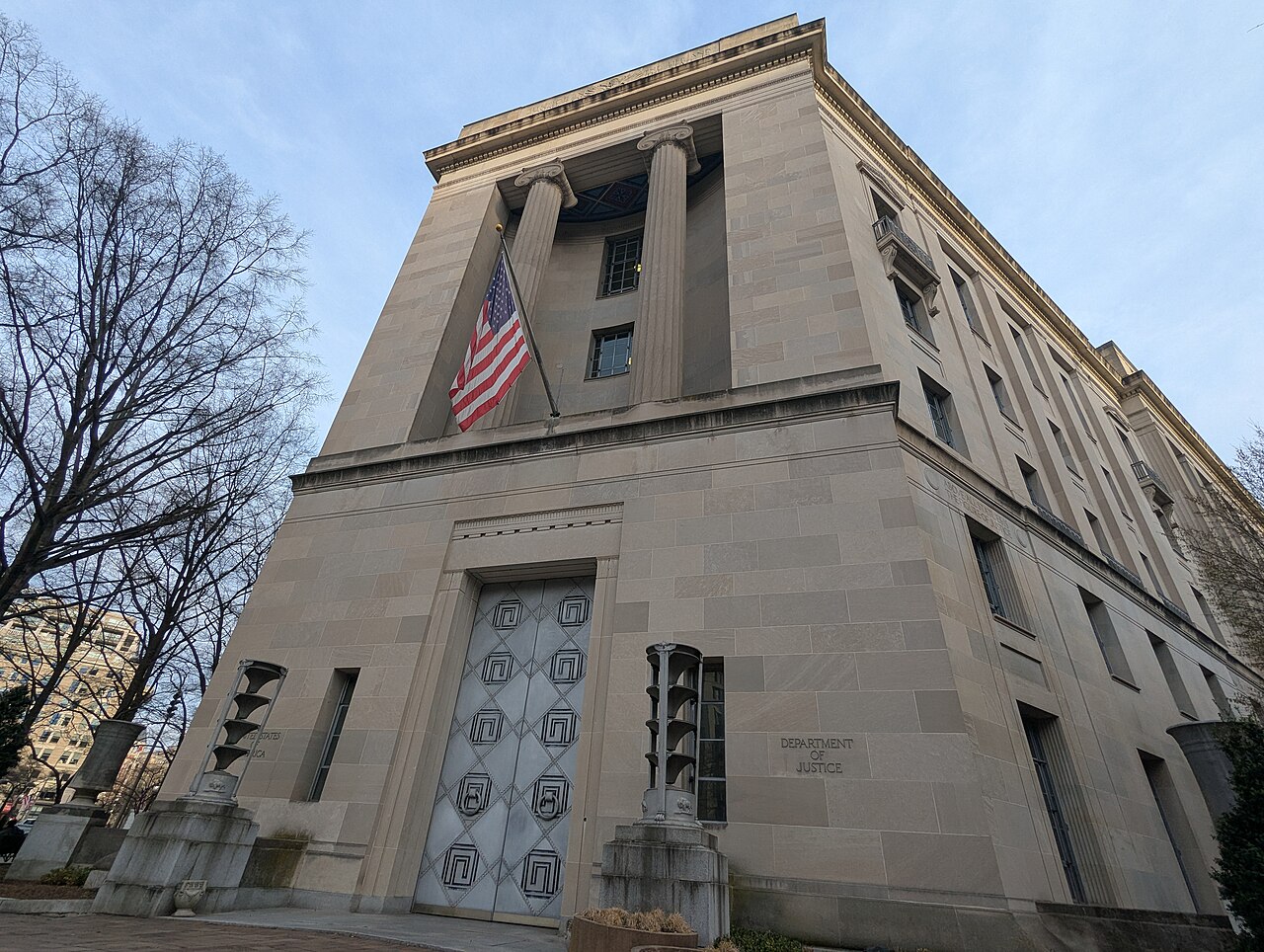
Robert F. Kennedy Department of Justice Building, Washington, D.C. Kentucky residents can copy letters asking police and the commonwealth's attorney to investigate DOGE’s handling of Social Security data under KRS 514.160.
Letters for Kentucky
These letters are activist material published by The Existentialist Republic. They are not legal advice, and The Existentialist Republic does not act as legal counsel for anyone who files. Each reader decides whether and when to file.
Kentucky elects a Commonwealth's attorney in each judicial circuit, and that office prosecutes felonies committed there. KRS 15.020 makes the Attorney General "the chief law officer of the Commonwealth of Kentucky," with authority to appear in all courts "except where it is made the duty of the Commonwealth's attorney or county attorney to represent the Commonwealth."
Already filed or written to one of these offices? Add your report so it counts, and come back with the reply when it arrives.
Write your two personal parts once
Every letter starts with your own opening and ends with your own closing, so no two letters arrive identical. The copy buttons switch on once both are filled in.
If you are a federal employee or hold a security clearance, you can leave out the police report and send the other letters. Send them from a personal email account on your own time, and sign as a private resident without a job title.
Letter 1, optional: the police report
To the [police department or sheriff’s office]:
[Your opening: where you live and why this matters to you, in one to three sentences.]
I am reporting suspected theft of identity under KRS 514.160. The Social Security Administration holds my personal information, including in the agency’s Numident file.
On Jan. 16, 2026, Justice Department lawyers filed a Notice of Corrections to the Record in AFSCME v. Social Security Administration, No. 1:25-cv-00596 (D. Md.), ECF 197. The Social Security Administration reported that the agency’s former Department of Government Efficiency team, known as DOGE, took actions “potentially outside of SSA policy and/or noncompliant with” a March 20, 2025, court order. From March 7 to March 17, 2025, team members shared data through Cloudflare, a third-party server, and the agency has not been able to determine what was shared. On March 3, 2025, a team member emailed the Department of Homeland Security an encrypted file and copied a senior adviser to the U.S. DOGE Temporary Organization and a DOGE-affiliated Labor Department employee. The agency believes the file held personal information, including names and addresses, of about 1,000 people, and the agency has been unable to open it. A team member signed a “Voter Data Agreement” with a political group seeking “to find evidence of voter fraud and to overturn election results in certain States.” On March 24, 2025, four days after the court order, a team member searched personal data in the Numident, the agency’s master file of Social Security numbers. In an Aug. 26, 2025, whistleblower disclosure, Charles Borges, then the agency’s chief data officer, said DOGE staff copied the Numident, with records on more than 300 million Americans, to a cloud environment without independent oversight. In March 2026, the agency’s Office of the Inspector General notified congressional committee leaders of a review of “the potential misuse of SSA data by a former DOGE employee.” On April 10, 2026, the full U.S. Court of Appeals for the 4th Circuit vacated a preliminary injunction for lack of irreparable harm without ruling on whether DOGE’s access was lawful. U.S. District Judge Ellen Lipton Hollander ordered discovery, including depositions, on April 14, 2026, and on June 26, 2026, refused to withdraw the order, writing that the government “may have ‘provided patently false information to the district court.’”
Please take this report and forward it to the Commonwealth's Attorney.
[Your closing: the reply you want.]
Respectfully,
[Full name]
[Street address]
[City, state, ZIP]
[Email or phone]Letter 2: the commonwealth's attorney
Dear Commonwealth's Attorney [last name]:
[Your opening.]
I am asking your office to open a criminal investigation into the conduct described below. The Social Security Administration holds my personal information, including in the agency’s Numident file.
On Jan. 16, 2026, Justice Department lawyers filed a Notice of Corrections to the Record in AFSCME v. Social Security Administration, No. 1:25-cv-00596 (D. Md.), ECF 197. The Social Security Administration reported that the agency’s former Department of Government Efficiency team, known as DOGE, took actions “potentially outside of SSA policy and/or noncompliant with” a March 20, 2025, court order. From March 7 to March 17, 2025, team members shared data through Cloudflare, a third-party server, and the agency has not been able to determine what was shared. On March 3, 2025, a team member emailed the Department of Homeland Security an encrypted file and copied a senior adviser to the U.S. DOGE Temporary Organization and a DOGE-affiliated Labor Department employee. The agency believes the file held personal information, including names and addresses, of about 1,000 people, and the agency has been unable to open it. A team member signed a “Voter Data Agreement” with a political group seeking “to find evidence of voter fraud and to overturn election results in certain States.” On March 24, 2025, four days after the court order, a team member searched personal data in the Numident, the agency’s master file of Social Security numbers. In an Aug. 26, 2025, whistleblower disclosure, Charles Borges, then the agency’s chief data officer, said DOGE staff copied the Numident, with records on more than 300 million Americans, to a cloud environment without independent oversight. In March 2026, the agency’s Office of the Inspector General notified congressional committee leaders of a review of “the potential misuse of SSA data by a former DOGE employee.” On April 10, 2026, the full U.S. Court of Appeals for the 4th Circuit vacated a preliminary injunction for lack of irreparable harm without ruling on whether DOGE’s access was lawful. U.S. District Judge Ellen Lipton Hollander ordered discovery, including depositions, on April 14, 2026, and on June 26, 2026, refused to withdraw the order, writing that the government “may have ‘provided patently false information to the district court.’”
As a Kentucky resident whose Social Security records are maintained by the Social Security Administration, I believe this conduct violates KRS 514.160. Theft of identity covers a person who "knowingly possesses or uses any current or former identifying information of the other person," including name, address, "Social Security number, driver's license number, birth date," and "any other information which could be used to identify the person," with intent to represent that he or she is the other person for the purpose of "obtaining benefits or property to which he or she would otherwise not be entitled" or "commercial or political benefit" (KRS 514.160(1)). Venue "may be in either the county where the offense was committed or the county where the other person resides" (KRS 514.160(5)).
In Colorado v. Symes, 286 U.S. 510 (1932), the U.S. Supreme Court held that federal officers “are not, merely because they are such, granted immunity from prosecution in state courts for crimes against state law.” The immunity recognized in In re Neagle, 135 U.S. 1 (1890), covers acts federal law authorizes that were necessary and proper to the officer’s duty, and the agency has said this conduct was potentially outside agency policy. The plaintiffs in the civil lawsuits seek court orders, and criminal charges require a prosecutor. The president’s pardon power applies only to “Offences against the United States” (U.S. Const. art. II, sec. 2), and in Gamble v. United States, 587 U.S. 678 (2019), the Supreme Court reaffirmed that each state prosecutes crimes under its own law as a separate sovereign. In April 2026, the Hennepin County Attorney’s Office in Minnesota charged a federal immigration officer with assault under state law.
I am asking you to use subpoenas to learn where Kentucky residents’ data went and who used it.
[If you filed a police report: I reported this to (agency) on (date), report number (number).]
[Your closing: the reply you want.]
Respectfully,
[Full name]
[Street address]
[City, state, ZIP]
[Email or phone]What officials in Kentucky said back
No reader reports are on record yet for this page.
Report what happened in Kentucky
If you filed a police report or sent one of these letters, add it here, and come back with the office’s reply when it arrives. The ER publishes each report’s state, office, outcome and month. The report contains no name, address, email address, phone number or case number.
What reason did the office give? Check all that apply.
Sources
- KRS 514.160
- KRS 15.020
- KRS 15.725
- Notice of Corrections, ECF 197
- Colorado v. Symes, 286 U.S. 510 (1932)
- In re Neagle, 135 U.S. 1 (1890)
- Gamble v. United States, 587 U.S. 678 (2019)
- U.S. Constitution, Article II, Section 2
Change log
- Feb. 17, 2026, version 1: First set posted as a comment on the Feb. 16, 2026, article. Original
- Sept. 29, 2026, version 2: Set rebuilt from the state’s own statutes, with every quotation checked against the official text or a published copy of the code.
These letters are activist material published by The Existentialist Republic. They are not legal advice, and The Existentialist Republic does not act as legal counsel for anyone who files. Each reader decides whether and when to file.
More campaigns
- DOGE grand jury petition kits
- Santa Fe petition to convene a grand jury on Todd Blanche
- Todd Blanche’s New York law license
- Make Corrupt Politicians Pay Act
- The Martin Act complaint against Jared Kushner
- Charging ICE agent Jonathan Ross in the killing of Renee Good
- DOGE police report letters for all 50 states